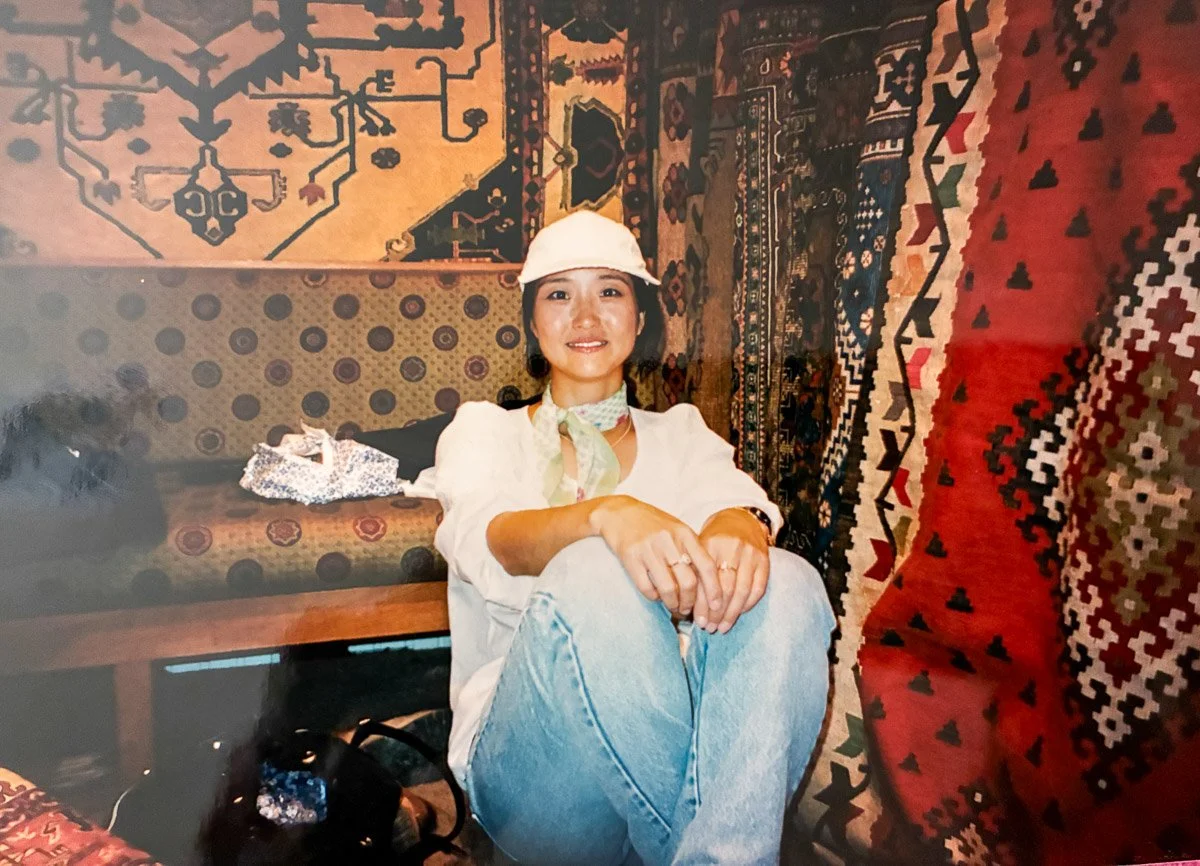
At a rug shop in Istanbul, perusing rare finds
Antique & Vintage Fine and Collectible Rugs
SoenHaus in Santa Clara, Utah, near St. George and Zion, offers a continually evolving collection of antique and vintage handwoven wool rugs, kilims, runners and collectible tribal textiles.
I strongly prefer rugs made from wool and other natural fibers. Each is selected individually for its beauty, craftsmanship, character and history. The collection ranges from exceptionally fine collector pieces to expressive village and tribal weavings, from small rugs and kilims to substantial room-size carpets.
I am drawn to the extraordinary range wool can have—from dense, finely woven rugs with an almost silky hand to thick tribal weavings and softly worn old kilims. Good wool also ages beautifully. Over decades, colors soften, pile changes and the surface develops a depth and character that cannot be replicated in a newly made rug.
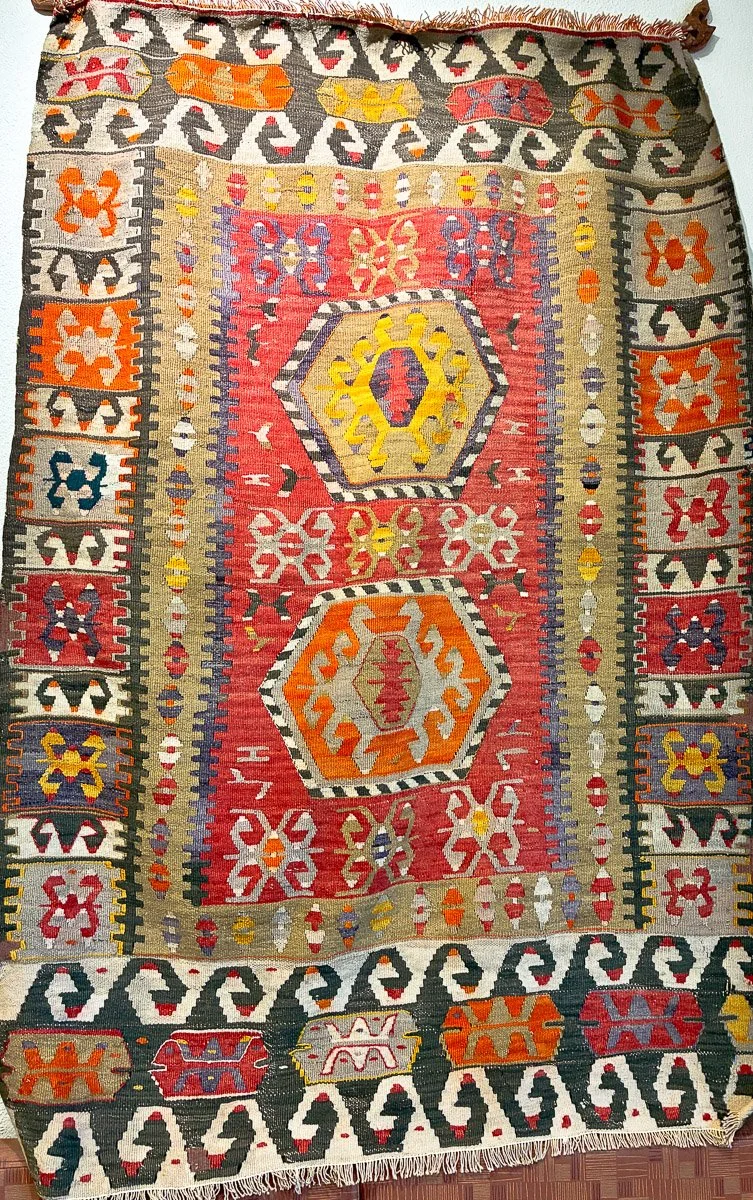
Late 19th-century Anatolian dowry kilim
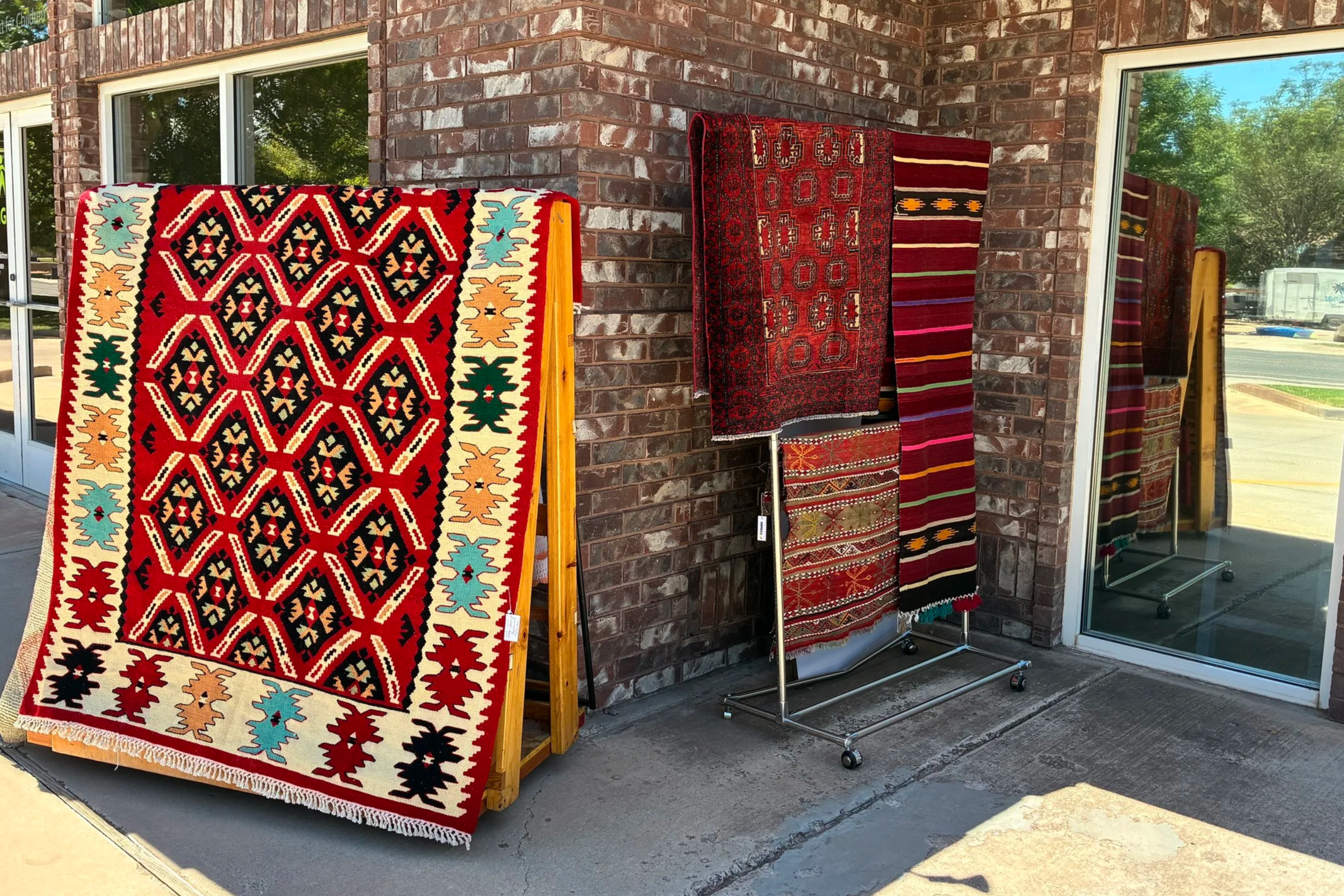
Turkish, Afghan, and Moroccan kilims and rugs
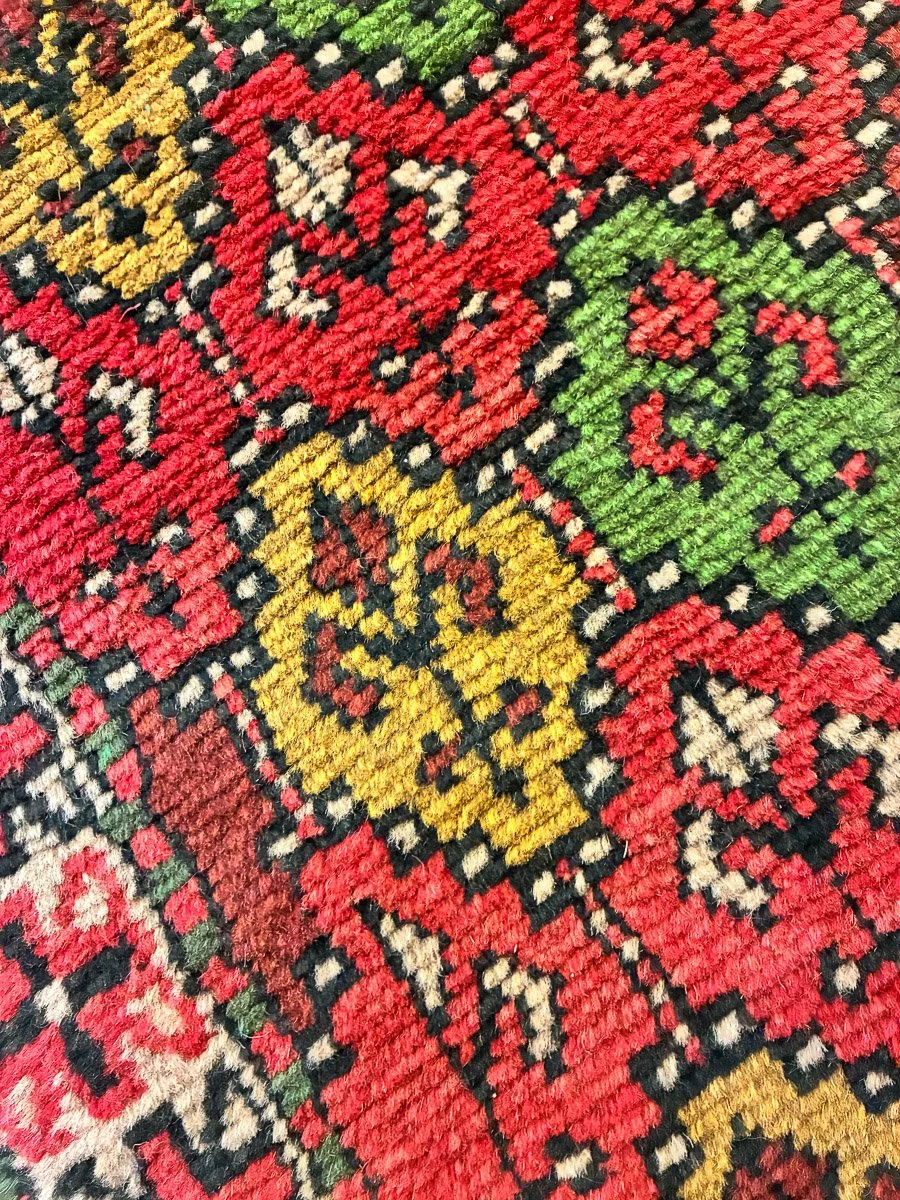
Vintage Turkish hand-knotted runner motif detail
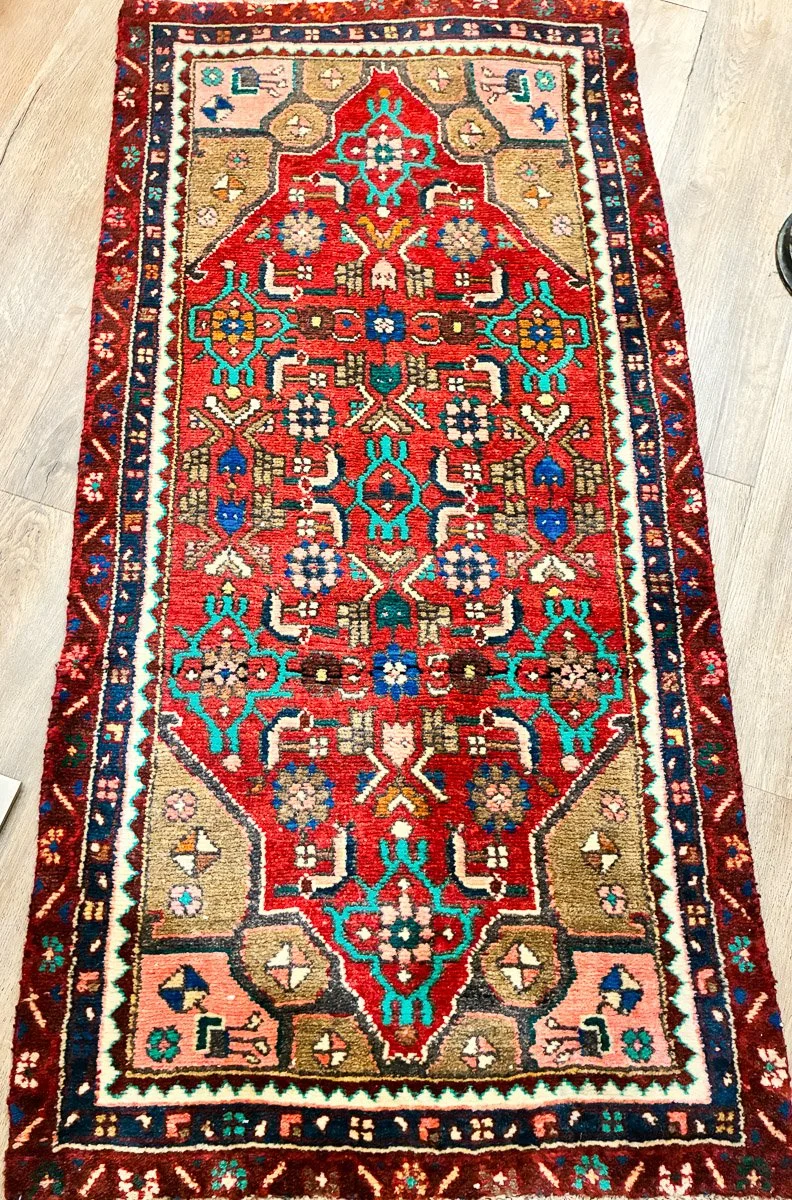
Thick pile runner
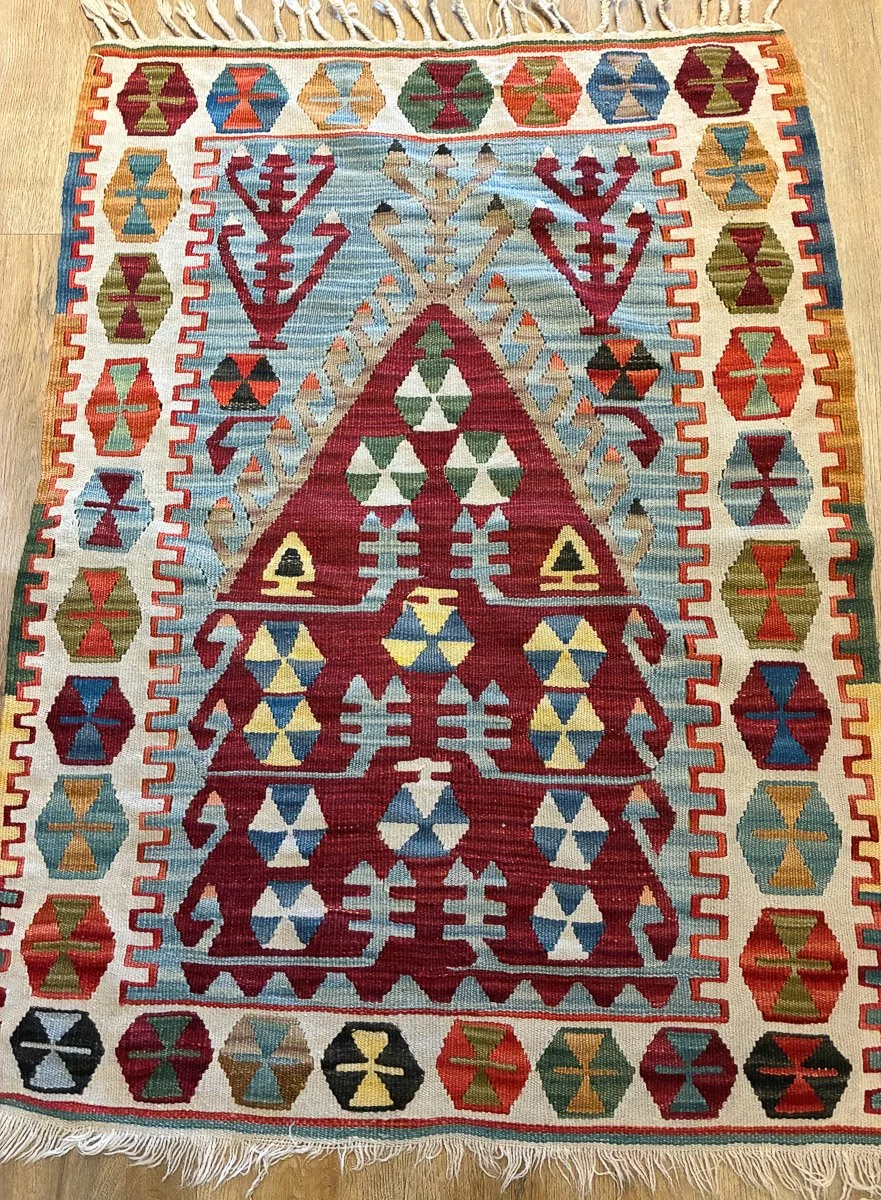
Turkish prayer rug
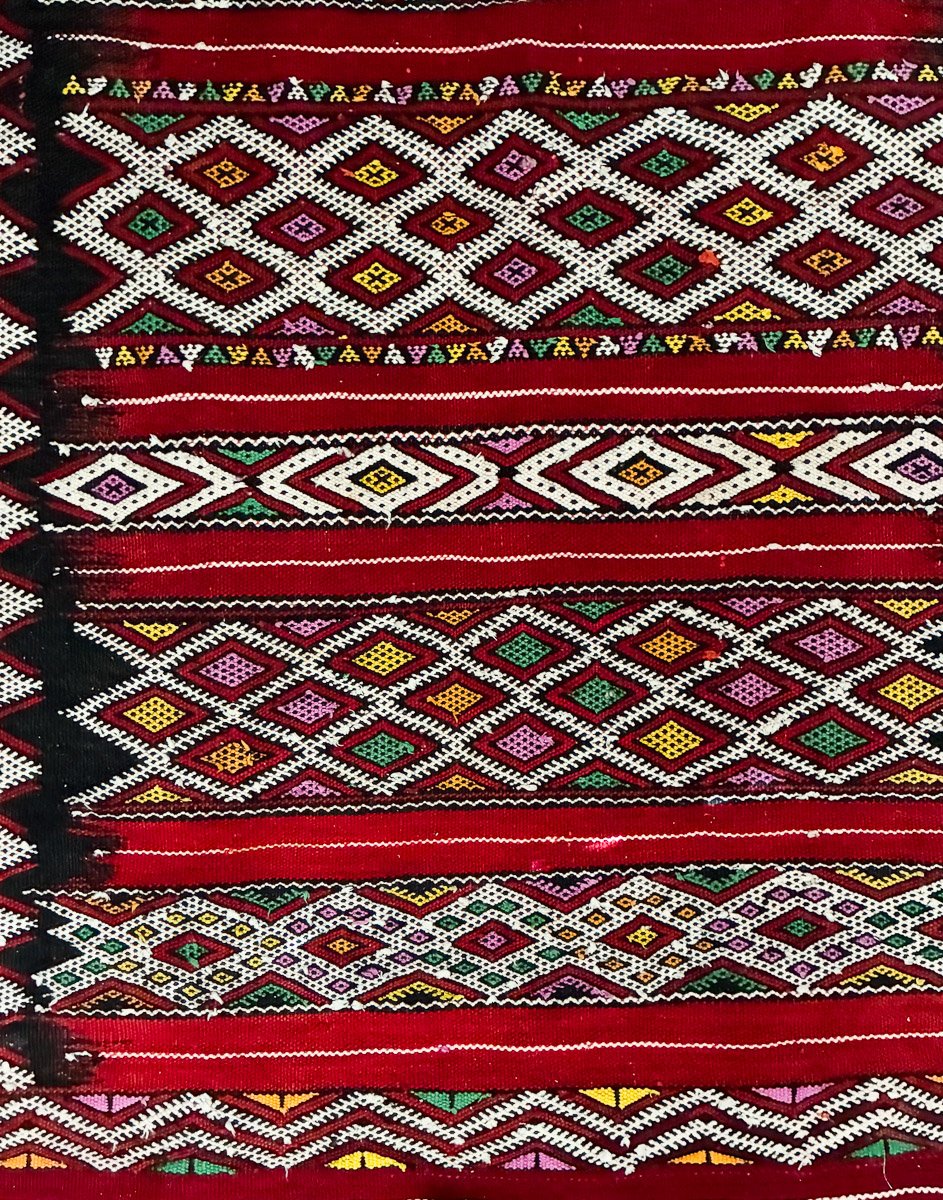
Vintage Moroccan Zemmour-style Hanbel Flatweave, handwoven wool, with supplementary-weft geometric decoration
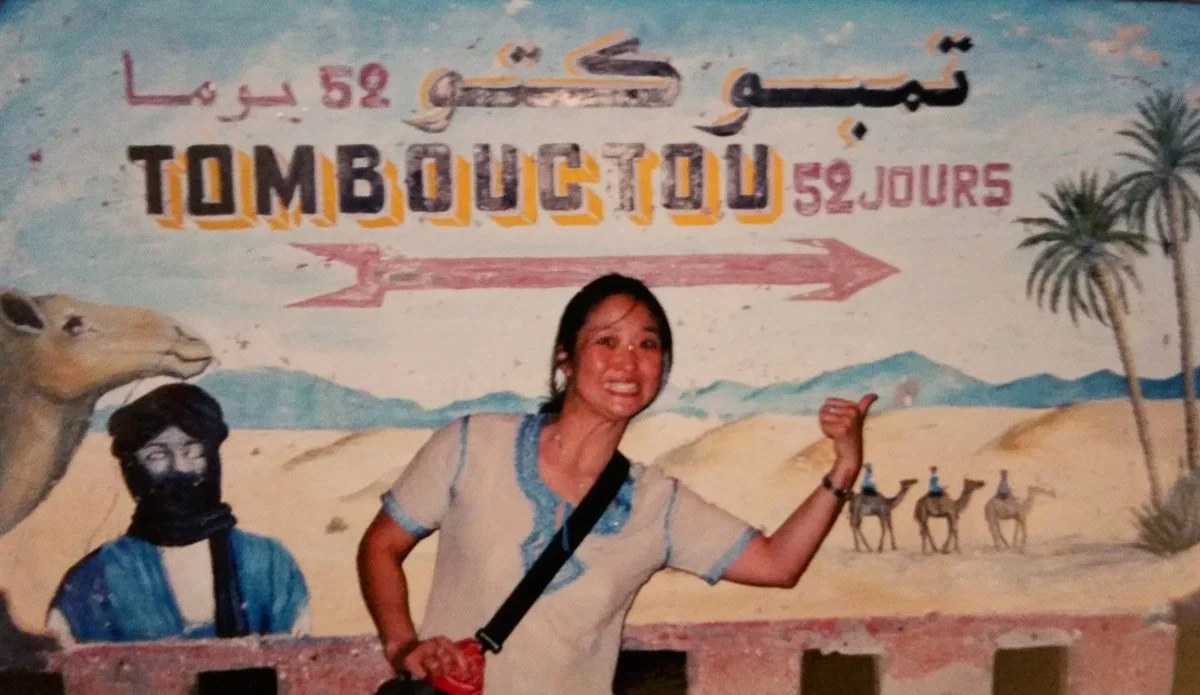
“52 days on foot to Timbuktu.” The sign was so funny, I had to take a photo with a big grin. Taken in Zagora while trekking the Sahara in southern Morocco in the ’90s.
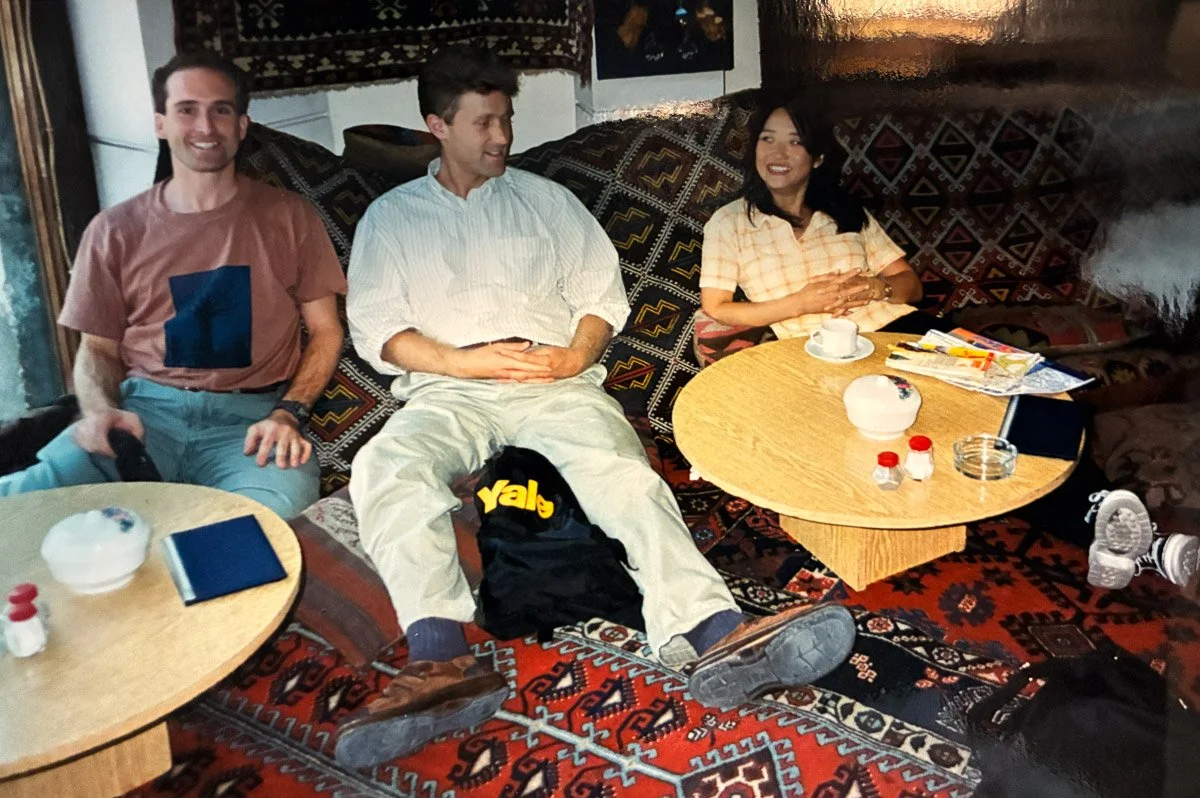
Taking a break from rug negotiations at a nearby café, chatting with some travelers from the U.S. I’d just met.
A Collection That Began With Travel
My love of rugs began in my late twenties, long before SoenHaus existed.
While traveling through Turkey and Morocco, I would spend hours going through stacks of rugs, pulling them out one after another and studying the colors, patterns, wool and weave until I found the pieces that spoke to me.
Finding the rug was only part of the experience. Then came the negotiating, which could take hours over conversation and many glasses of tea. In Morocco, mint tea seemed to accompany nearly every negotiation. Having grown up in Korea, the art of bargaining was already in my blood.
In those early years, I traveled lightly, so I deliberately sought out smaller rugs that I could fold into a suitcase or somehow carry home in my backpack. Some of those early discoveries remain among my most treasured possessions because I still remember where I found them, the experience of acquiring them, and actually carrying them home myself.
And when I came across an especially precious dowry piece, all practicality could go out the window. I was known to part with most of my American Express Travelers Cheques to acquire something I knew I might never come across again.
At the time, I didn’t acquire pieces like this simply to put them to use. To me, they were objets d’art—things to be treasured. I would use them lightly and in rotation, then tuck them away in a cedar chest when not in use, or hang them on the wall as art.
As the years went on, my eye and my collection expanded. I began acquiring larger rugs, first for my own homes and later for interior design projects.
Rugs became an essential part of the way I approached a room—not simply as floor coverings, but as art, color, texture and history, capable of giving an interior its character.
Heirloom & Collector Rugs
Over the years, I also began acquiring rare and exceptionally finely crafted textiles that belong in an entirely different category from ordinary decorative rugs.
Among my personal heirloom pieces is an extraordinarily finely woven Turkish kilim created within a nomadic tribal tradition. The fineness of the weave, complexity of the pattern and remarkable craftsmanship distinguish it immediately from a typical decorative kilim.
I acquired several exceptional nomadic Turkish kilims during my years of travel and collecting. Some were dowry textiles and other finely crafted tribal pieces whose rarity, workmanship and cultural history make them closer to works of textile art than furnishings.
These are pieces I consider heirlooms rather than inventory.
Some rugs captivate through extraordinary refinement—the precision of their weaving, sophisticated drawing, superb wool and remarkable workmanship. Others are much more spontaneous: bold, irregular village or tribal pieces whose power comes from color, geometry and the individuality of the weaver.
I value both.
What matters is that a rug possesses something worth looking at.
Rugs Collected as Art
I have never thought of a good rug simply as something used to cover a floor.
A handmade rug can contain an enormous amount of information: the hand of its maker, materials native to a region, generations of pattern language, variations in wool and color, changes of rhythm within the weave and the evidence of decades of use.
Traditional tribal weavings are particularly fascinating because their motifs may belong to a visual vocabulary passed from one generation to another, while each individual weaver inevitably introduces variations of her own.
An unexpected change in a border, a shift in color or imperfect symmetry can be part of what makes an old handmade rug so alive.
That is why I select rugs individually rather than purchasing them simply according to size, pattern or color.
I look for good wool, compelling drawing, unusual or beautiful color, interesting construction, exceptional weaving, age and patina—and sometimes an indefinable quality that simply makes me want to keep looking at a piece.
Antique & Vintage Wool Rugs From Historic Weaving Traditions
The SoenHaus rug collection crosses a number of historic weaving traditions, including Anatolian, Persian, Afghan and Moroccan rugs and textiles.
At different times, the collection may include antique and vintage Turkish and Anatolian rugs and kilims, Persian carpets, Afghan rugs and runners, Moroccan rugs and textiles, small tribal and prayer rugs, flatwoven kilims, gallery runners and substantial room-size carpets.
Some are rare and exceptionally finely crafted collector pieces. Some have sophisticated pattern and remarkable color. Others are simpler, more graphic and expressive.
Age can transform them in equally interesting ways.
A once-vivid palette may mellow over many decades into subtle and complex color. Wool acquires a different surface. Pile becomes soft and irregular. Abrash, fading, old repairs and areas of wear become part of the history of the textile.
I am not looking for artificial perfection.
I am looking for character, quality and beauty.
Old Rugs in Modern Interiors
My background in art, art history, and design has strongly influenced the way I live with and use old rugs.
I have never believed that an antique rug needs an antique room.
In fact, I often find old textiles most compelling alongside modern design.
A geometric Anatolian rug beneath a Saarinen table can look startlingly contemporary. An old tribal rug can bring warmth and humanity to an interior of steel, glass and modern art. A small collectible rug can have nearly the same visual presence as a painting.
I particularly love the tension created by bringing together different periods and cultures—the precision of modern design against something handmade, irregular and carrying the history of another place and time.
That juxtaposition has been part of my own interiors for decades, later became part of my professional design work, and is now very much part of the SoenHaus point of view.
Age, Origin & Attribution
Old rugs do not always arrive with documented provenance, and identifying them with absolute certainty is not always possible.
Construction, weave, foundation, wool, motifs, borders, finishing techniques, color and wear can all provide clues to origin and age.
I prefer to be conservative in how I describe them.
When I believe a region, weaving tradition or approximate age can be identified with reasonable confidence, I describe it accordingly. When certainty is not possible, I would rather say so than give a rug a more impressive attribution than the evidence supports.
The same applies to natural and vegetable dyes. Soft, complex or beautifully faded color may suggest traditional dyeing methods, but appearance alone is not proof.
A beautiful rug does not become less beautiful because part of its history remains unknown.
Explore the SoenHaus Rug Collection
The collection is continually changing and may include antique and vintage handwoven wool rugs, finely woven collector pieces, heirloom-quality tribal textiles, Anatolian rugs and kilims, Persian carpets, Afghan rugs and runners, Moroccan rugs and textiles, small tribal and prayer rugs, gallery runners and substantial room-size carpets.
Many are one of a kind. Not every rug available at SoenHaus is shown online or kept in the boutique at all times.
If you are looking for a particular size, palette or character, ask what is currently available. I am always happy to unfold pieces, look at them with you and share what I know about their construction, history and condition. I can also bring additional pieces from the collection into the boutique. Not sure what will work in your space? Bring photographs and approximate measurements of your room. I am happy to help you look at scale, color and placement.
SoenHaus is located in Santa Clara, Utah, near St. George and on the way to Zion National Park.
Old rugs deserve to be seen in person. Photographs can show the design, but they rarely convey the wool, weight, weave, depth of color, subtle irregularities and tactile quality that make an exceptional handwoven rug special.
Natural Materials Matter
I strongly prefer rugs made from wool and other natural fibers.
Part of that preference is simply how I want to live. I would rather bring wool, cotton and other natural materials into a home than add more synthetic fibers and plastics wherever they are unnecessary.
But there is also a practical reason. Good wool is remarkably resilient. In a well-made rug, it can withstand decades of use and, with proper care, often becomes more beautiful with age. That longevity is one of the things I value most about old rugs.
We also carry, or can source through my dealers, premium cowhide and sheepskin. I am particular about the quality of the hides I select, especially the tanning and finish. I look for supple hides with a soft suede underside, a lustrous surface and no unpleasant tanning odor.
Premium hides may come from the U.S., Brazil, Argentina, Australia or New Zealand, depending on the type. I select for the quality of the hide and tanning rather than country of origin alone.
For me, a rug should be something worth living with for a very long time—not something designed to be replaced every few years.
Caring for Antique & Vintage Rugs
A good handmade rug can last for generations, but how it is cleaned matters.
A Simple Routine Refresh
For a sturdy wool rug, one of my favorite ways to refresh it is also one of the simplest: take it outside, gently shake or lightly beat out the accumulated dust, then allow it to air in the sun for a short while.
I prefer brief sun exposure rather than leaving an old rug outside for hours. Strong or prolonged sunlight can fade natural dyes and weaken fibers over time.
This is not appropriate for every rug. Fragile antique rugs, worn areas, weakened foundations and delicate flatweaves should be handled much more gently. When in doubt, vacuum carefully and consult a rug specialist rather than beating or washing the piece.
Hand-Knotted Wool Rugs
Vacuum regularly, but gently. I prefer suction without an aggressive rotating brush or beater bar, particularly on older rugs. Rotate the rug periodically so that traffic and sunlight do not repeatedly affect the same areas.
For spills, blot immediately rather than rubbing. With an old rug, especially one with uncertain dyes, avoid experimenting with household stain removers. When deeper cleaning is needed, use a professional who specializes in washing handmade wool rugs rather than ordinary wall-to-wall carpet cleaning.
Kilims & Flatwoven Rugs
Flatweaves require a little more care because there is no pile protecting the woven structure. Vacuum gently on both sides when practical, avoiding loose edges and fringe.
Do not assume an old kilim can simply be washed because it is flatwoven. Some dyes can migrate and older fibers may be more fragile than they appear. Valuable or vintage kilims are best cleaned by someone experienced with handwoven textiles.
Moroccan & High-Pile Wool Rugs
Longer pile traps dust more readily, so regular gentle vacuuming is important. Avoid an aggressive brush roll that can pull or distort the pile.